
2026-09-18 · Rick Sanders
Fixing Frozen Sump Pump Lines in Akron Winters
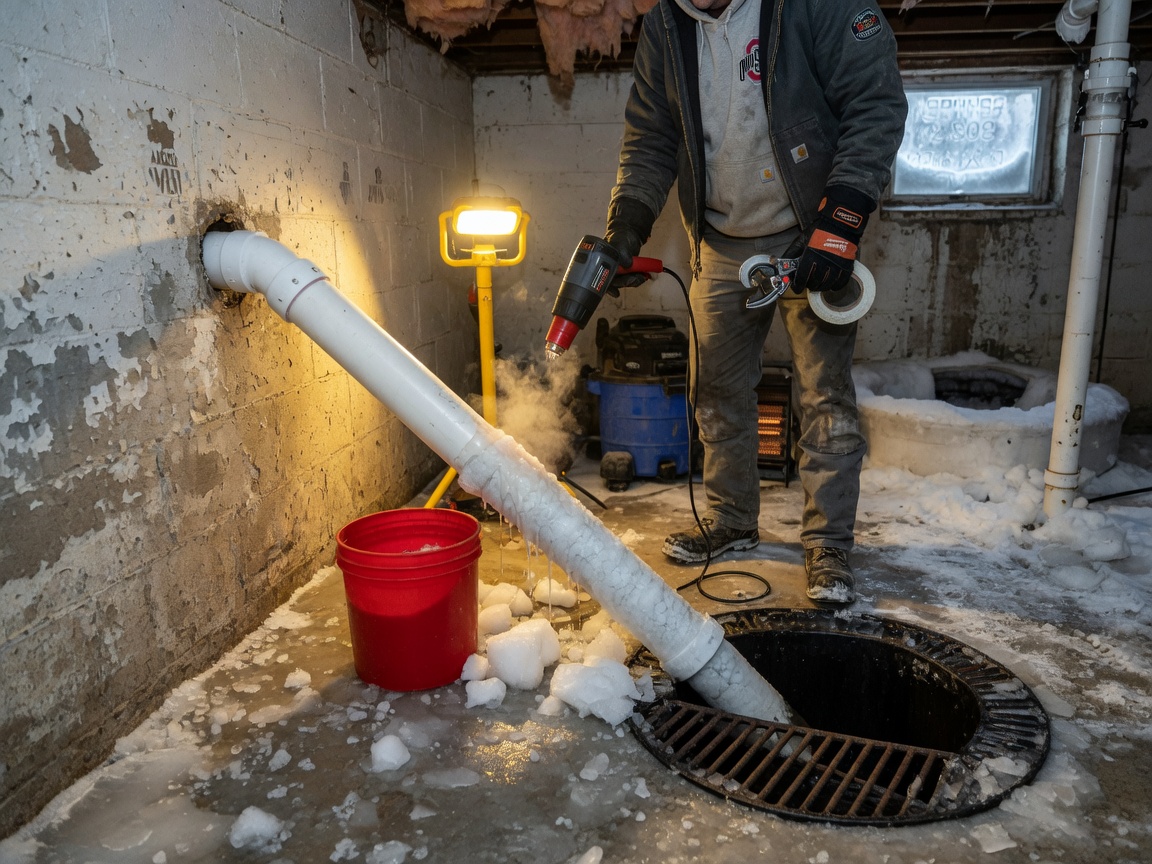
Fixing frozen sump pump lines in Akron winters starts with applying controlled heat to the discharge pipe, usually restoring flow in 20–90 minutes once the ice blockage clears.
Why Lines Freeze in Akron Winters
Summit County experiences prolonged sub-freezing stretches that penetrate shallow or exposed discharge pipes common in homes built before 1970 in neighborhoods such as Highland Square, North Hill, and Ellet. Cold air sinks into low-lying yards near the University of Akron campus and along the Cuyahoga River valley, dropping ground temperatures faster than in flatter terrain. Homes in Goodyear Heights and Firestone Park often have original galvanized or PVC lines routed above the frost line or through unheated crawl spaces, allowing ice to form overnight when temperatures stay below 20 °F. The same pattern appears in nearby Cuyahoga Falls where older ranch-style houses sit on slight slopes that direct meltwater toward the pipe outlet. Once ice forms, even a working sump pump cannot push water past the blockage, leading to basement backups during the next thaw cycle.
Identifying the Problem Early
Listen for the pump running longer than normal without water exiting the discharge point outside. Check the line at the exterior wall for frost or bulging, especially after nights when lows reach single digits. In West Akron and Middlebury, residents often notice water pooling near the foundation when the line is blocked. Compare the sound of the pump against a normal cycle; a strained motor indicates back-pressure from ice. These signs appear most often in January and February when Akron averages 15–20 days below freezing. Early detection prevents the pump from burning out while fighting the obstruction.
Safe Thawing Steps for Homeowners
Shut off power to the sump pump at the breaker before any work. Pour warm, not boiling, water over the exterior section of the discharge pipe starting at the highest point and working downward. Wrap sections with towels soaked in warm water and replace them every 10 minutes until flow resumes. For lines running under decks or through tight spaces common in Kenmore, apply heat tape rated for outdoor use and plug it into a GFCI outlet only after the initial thaw. Never use open flames or steamers on PVC, as the material softens above 140 °F. Once water flows again, test the pump by pouring a bucket of water into the pit and confirming discharge at least 10 feet from the foundation.
Preventing Recurrence with Proper Upgrades
Install a Battery Backup Sump Pump System so the pump continues operating during power outages that often accompany winter storms. Reroute the discharge line deeper or add a Sump Pump Discharge and Drainage Repair to bury the pipe below the local frost line of 30–36 inches. In areas like Kenmore and Ellet where clay soils retain moisture, slope the final 5–8 feet of pipe away from the house at a minimum 1/8-inch per foot. Homeowners in Cuyahoga Falls and Kent facing repeated issues should also review Sump Pump Repair Tips Before Akron Spring Thaw for seasonal checks. These changes address the root conditions created by Akron’s cold winters rather than treating symptoms each year.
When Professional Help Is Required
If the line remains blocked after two thawing attempts or the pump shows signs of overheating, contact Akron Pump Pros at 73 E Exchange St. Our team serves Summit County neighborhoods daily and can inspect the full discharge path for hidden breaks or improper pitch. We maintain regular hours Monday through Friday 8am–6pm and Saturday 9am–2pm to handle urgent winter calls without delay.